
Checking Criminal History in Kalawao County
No single Kalawao counter or database contains the complete story. Start with the type of fact sought: eCourt Kōkua for a filed case, eCrim for a public adult Hawaii conviction, an acting police agency for its incident report, or SAVIN/VINELink for custody. A full legal name, birth date, aliases, approximate incident date, and case or arrest number help separate people with similar names.
The route below moves from broad public indexes to the originating record. Each system answers a different question, so a blank result in one does not establish that no arrest, case, or restricted record exists.
Search quality improves when the question is specific. A person reviewing an old case should note the island, approximate filing year, offense type, and any prior name. Someone locating a recent custody record should identify the arresting agency and allow time for a transfer or court filing to appear. When spelling, dates, or identifiers conflict, keep the records separate until an official document connects them. Certified copies come from the issuing office, while fingerprint comparison through HCJDC is the strongest route for confirming that your own repository history belongs to you.
- Search eCourt Kōkua by person, case ID, filing date, or hearing calendar for public Hawaii Judiciary entries.
- Compare the court, filing date, case type, aliases, and party details before selecting a possible match.
- Open the docket, offenses, events, and disposition, then purchase a public document only when its contents are needed.
- Check eCrim separately for the public adult-conviction slice, or use HCJDC Access and Review for your own fingerprint-linked history.
- Request the incident, booking, certified court, or custody record from the agency that actually holds it.
Why Kalawao Has No One-Stop Records Counter
Kalawao County covers the Kalaupapa Peninsula and operates under a special Department of Health framework. It has no conventional county courthouse, elected sheriff's records office, local jail, prosecutor, or police department. NPS rangers and deputized Kalawao officers may act locally, while Maui Police provides mutual aid and Hawaii state agencies keep court, repository, custody, and registry records.
The Department of Health's Kalaupapa updates explain that unusual governance structure.
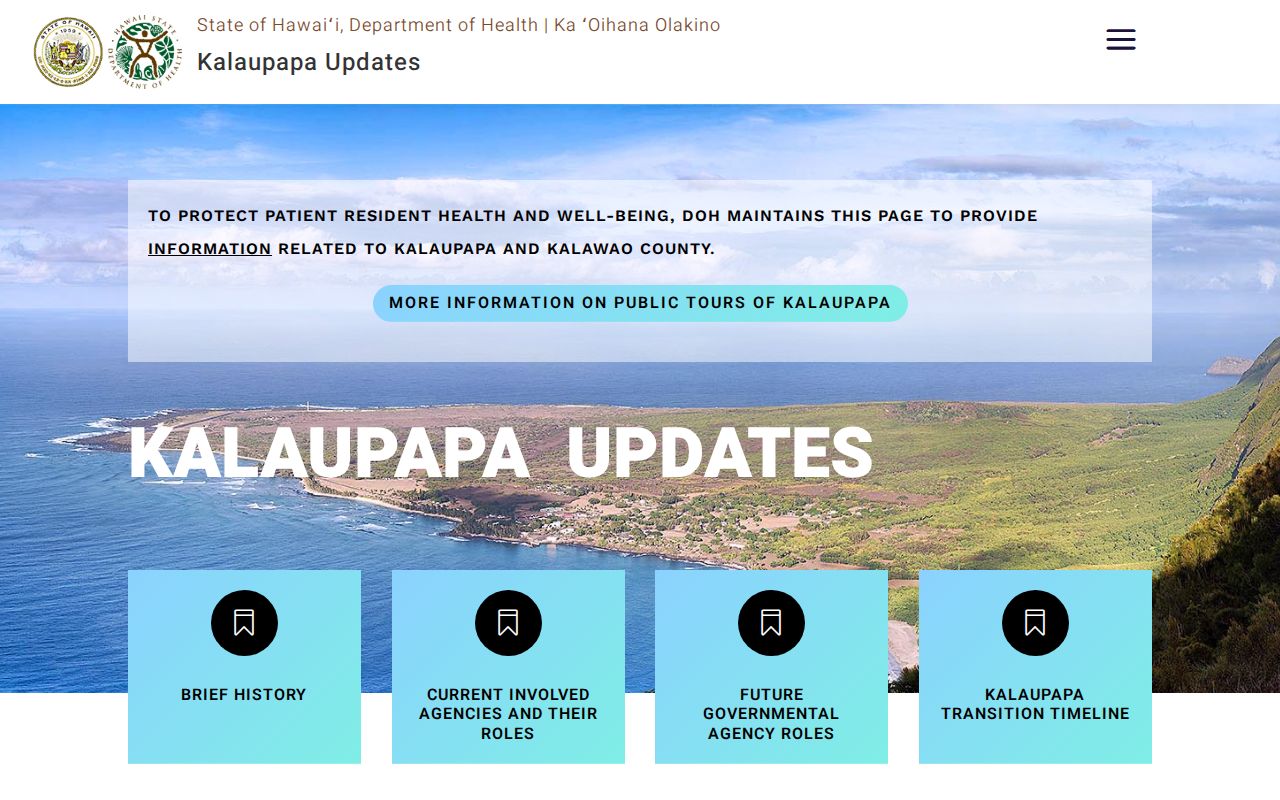
The official view helps explain why a request must be routed by acting agency instead of mailed to a generic county clerk.
That routing question should be resolved before a public-records request is written. An MPD report request needs MPD's identifying event details and request channel. State sheriff material goes through the Department of Law Enforcement Sheriff Division Records office. NPS ranger records may require the park contact or a federal Freedom of Information Act request. Court documents belong to the Judiciary even when the same event began with a ranger or mutual-aid arrest. Asking one office for “everything” can produce a narrow response because that office can disclose only the records it maintains.
| Court case | Hawaii Judiciary eCourt Kōkua, Molokai District Court, or Hoapili Hale |
|---|---|
| Adult conviction | HCJDC eCrim |
| Police report | MPD, DLE Sheriff Records, or NPS, depending on who acted |
| Custody | DCR SAVIN/VINELink or Maui Community Correctional Center |
| Covered offender | Hawaii Covered Offender Registry |
Hawaii Official Background Checks
The Hawaii Department of the Attorney General's Hawaii Criminal Justice Data Center, or HCJDC, maintains the central repository. Its eCrim service sells a name search of adult Hawaii conviction information for $5 and a certified result for $12. It does not disclose every pending or non-conviction arrest, juvenile matter, federal case, or out-of-state record.
For review of your own more complete Hawaii history, HCJDC offers fingerprint-based Access and Review under HRS §846-14. Fieldprint Hawaii serves certain checks required by statute, but no commercial fingerprint site was verified inside Kalawao. An appointment may require travel outside the county. An FBI Identity History Summary is a separate subject-only federal and multistate product.
eCourt Kōkua Search Controls and Coverage Gaps
eCourt Kōkua permits a person search by first and last name, with phonetic and partial-name options. A user can narrow by filing date or case type, search by Party ID, or enter a case ID and other identifiers such as an arrest number, OTN, SID, application number, or TCT number. Filing-date searches use dependent court selectors and a maximum 60-day date range.
| Person | First and last name required; filing date and case type optional |
|---|---|
| Case | Case ID is the main key; arrest number, OTN, SID, and other IDs may narrow it |
| Filing date | Court type, court, location, case type, and a date pair up to 60 days |
| Hearings | Island, location, courtroom or division, date, and optional time |
Online coverage is not complete. District Court criminal cases before July 2012, Circuit criminal cases before January 2000, and some older traffic and appellate matters require a Judiciary counter or written request. Public electronic details can also omit sealed, confidential, and counter-only documents.
Results are arranged into distinct views. The summary identifies case status, filing date, court, and location. Party records can show roles, aliases, Party IDs, and attorneys. Criminal cases may add offenses, bail or bond information, scheduled and completed events, dockets, and hearing details. Public attachments display a PDF purchase control, while an in-camera, sealed, or confidential item may be masked or absent. Old migrated case IDs can require circuit, case-type, and leading-zero conversion, so a failed exact-ID search should be followed by a person search and a narrower filing window.
Criminal Record Types
“Criminal record” is a convenient phrase for documents created at several steps. A ranger or officer records an alleged event; an intake operation makes a booking record; the prosecutor files charges; the Judiciary records adjudication; and HCJDC receives fingerprint-supported arrest cycles and reported outcomes. Those records can disagree temporarily because they update on different schedules.
Public access also differs by record type. A court docket is not the same as an officer narrative, eCrim is narrower than a subject's full repository history, and a custody notification is not a local jail roster.
- Incident and arrest reports: held by the ranger, sheriff, or MPD unit that created them.
- Booking records: document intake and custody, but do not prove guilt.
- Court files: show charges, events, orders, dispositions, and sentences in public portions.
- Repository history: links arrest cycles by fingerprints; public eCrim exposes only its permitted conviction slice.
- Custody, supervision, and registry records: live in distinct DCR, Judiciary, parole, and HCJDC systems.
Second Circuit Courts Serving the Peninsula
Kalawao falls in Hawaii's Second Judicial Circuit. Molokai District Court at 55 Makaena Street in Kaunakakai handles lower-level District Court jurisdiction and can be reached at 808-553-1100. Circuit felony files and older central records are associated with Hoapili Hale's Legal Documents Branch at 2145 Main Street in Wailuku, 808-244-2969.
The National Park Service's Kalaupapa page shows the peninsula's park setting and contact context.
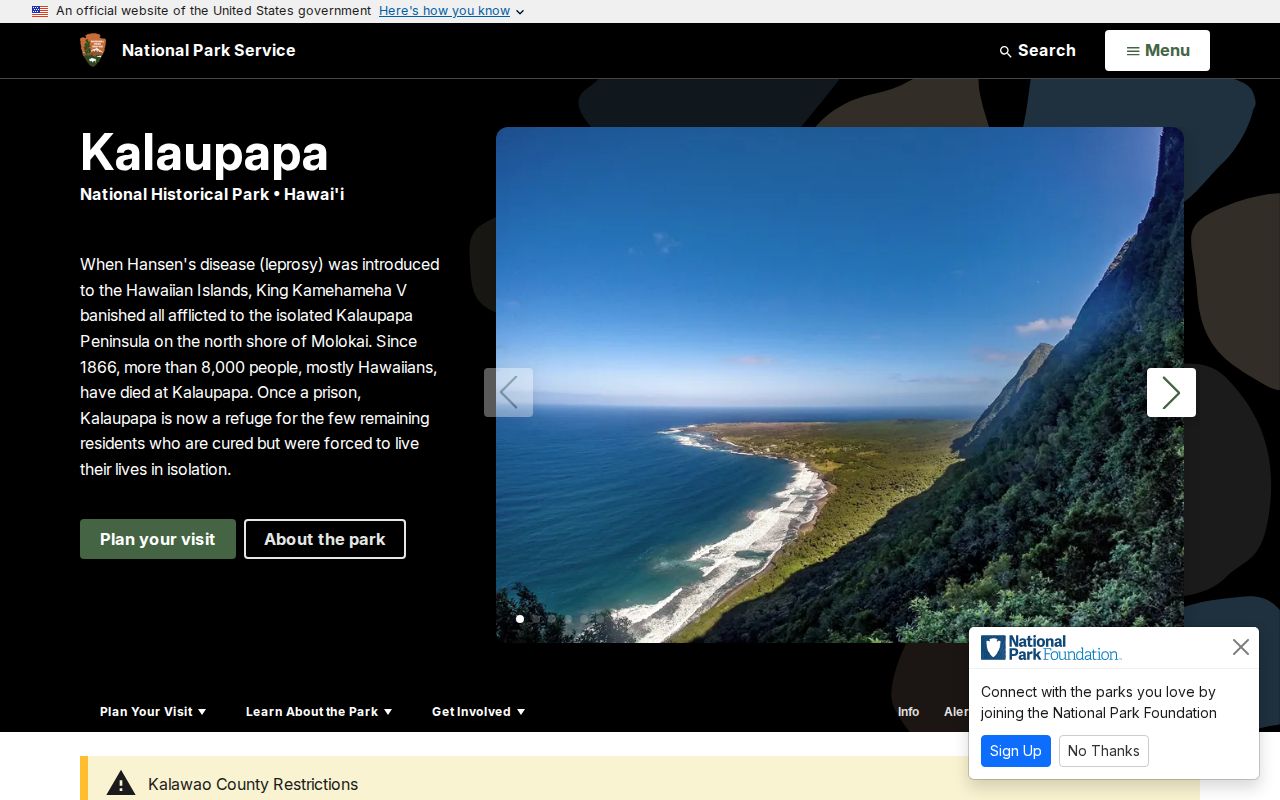
This federal contact is not a Judiciary counter. The practical court route remains eCourt Kōkua, Molokai District Court, or the Second Circuit Legal Documents Branch.
Molokai District Court
55 Makaena Street, Kaunakakai, HI 96748
808-553-1100
Hoapili Hale
2145 Main Street, Wailuku, HI 96793
Records: 808-244-2969
Inside a Kalawao County Criminal Record
A complete HCJDC history centers on fingerprint-supported identification and arrest cycles, while a court record centers on the filed case. Read the source label before interpreting a field. Similar-looking dates can refer to arrest, filing, hearing, disposition, or sentence, and an alias-based name match is not fingerprint confirmation.
| Name & Identifiers | Legal name, aliases, physical identifiers, Party ID, SID, or tracking data when applicable |
|---|---|
| Arrest / Booking Data | Arrest date, acting agency, alleged offenses, intake, and custody information |
| Charges & Statutes | Each filed count, classification, statute, and later amendment |
| Disposition | Guilty result, acquittal, dismissal, deferral, or other outcome by count |
| Sentence | Custody, probation, assessments, and other court-ordered consequences |
| Custody / Supervision Status | Later DCR, Adult Client Services, or parole information, subject to access limits |
Custody After a Kalawao Arrest
Kalawao has no jail, detention facility, booking log, or inmate portal. Hawaii runs its jails through DCR. After transfer, the relevant regional jail is Maui Community Correctional Center in Wailuku, which houses pretrial detainees, some sentenced-felon reintegration cases, and parole violators.
The Hawaii SAVIN page directs users to VINELink custody and parole information and notification services.
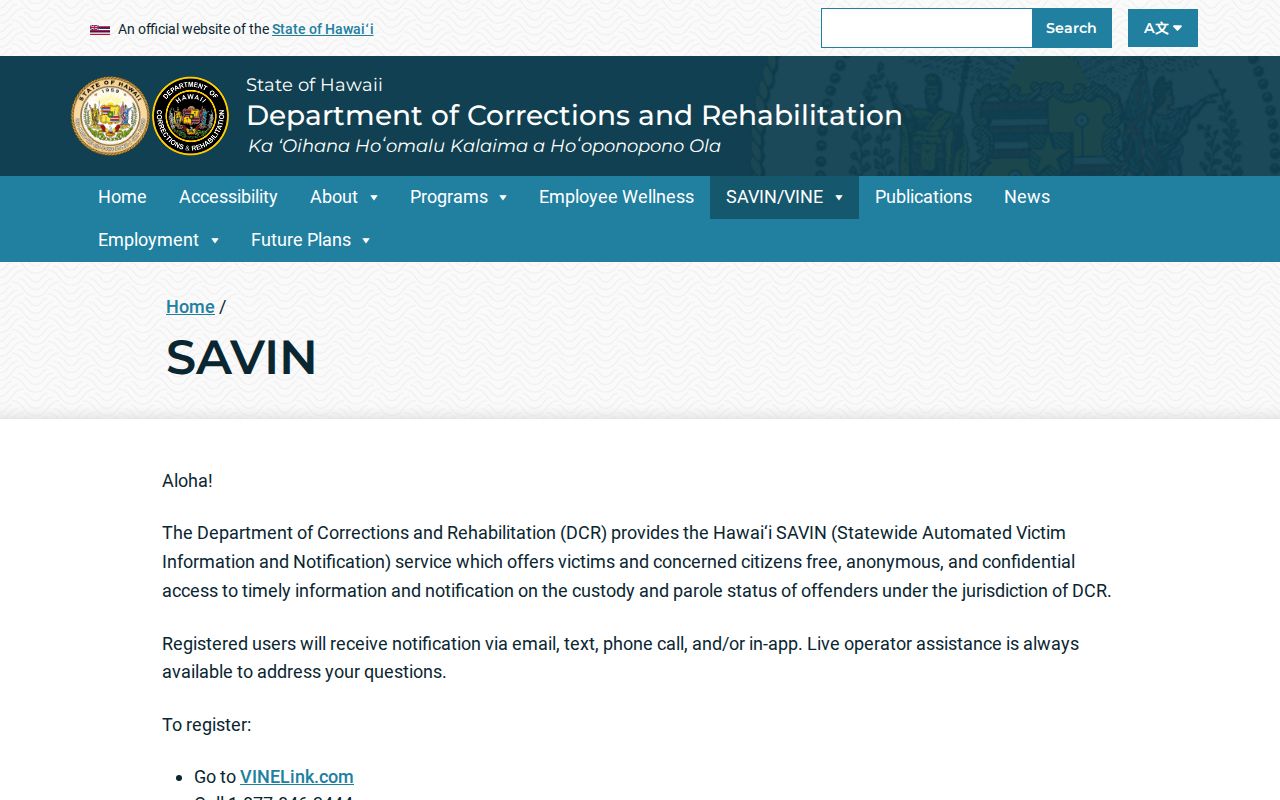
SAVIN is a status and notification channel rather than proof of the allegations, the court outcome, or a Kalawao booking roster.
Public Access Laws in Hawaii
Hawaii's Uniform Information Practices Act favors access to government records while recognizing privacy, litigation, and other statutory limits. Criminal-history dissemination rules separately limit what HCJDC may disclose. That is why public eCrim returns adult conviction information rather than every arrest cycle in the repository.
Key Statutes:
HRS §92F-2 states Hawaii's public-records policy of openness balanced with privacy.
HRS §§846-9 and 846-10 govern dissemination of criminal-history information.
HRS §846-14 provides the subject's Access and Review route.
HRS §831-3.2 authorizes qualifying arrest-record expungement.
Current Fees and Timing
Costs depend on the product, not on Kalawao residence. Basic eCourt case information is free, while public PDFs cost at least $3 per document. HCJDC name and fingerprint products use separate schedules, and older or off-site court files can take longer than an electronic lookup.
| eCrim name search | $5 per unique name; $12 certified result |
|---|---|
| eCourt public PDF | $3 per document or 10 cents per page, whichever is greater; $2 electronic certification |
| Court paper copy | $3 for the first 30 pages, then 10 cents per page |
| HCJDC staff name check | $30; generally 3 to 5 business days |
| Expungement application | $35 first application or $50 later application; current processing estimate 120 days |
Confirm fees before paying because agency schedules can change. eCourt payments are nonrefundable, and some new filings take about three business days to become available.
Sealed, Expunged, and Restricted Records
Juvenile information, non-conviction repository arrests, sealed or confidential court events, victim information, and protected identifiers may be withheld or masked. Public court PDFs redact electronic Social Security numbers, birth dates, home addresses, and phone numbers. A missing public entry can therefore reflect a legal access rule rather than the absence of an underlying record.
HCJDC currently estimates 120 days for qualifying arrest-record expungement under HRS §831-3.2 and offers no expedited option. Orders effective July 1, 2025 or later are automatically transmitted to the Judiciary for consideration of related court relief; earlier orders require separate court contact. Repository, arresting-agency, and Judiciary records are distinct, so relief in one place may not erase every other file.
Kalawao County Criminal Records by City
Kalawao has no incorporated city or Census-designated place, so there are no city police departments, municipal courts, population-ranked city guides, or city booking systems to search. Kalaupapa and Kalawao are settlements, not qualifying cities or CDPs. Use the county's agency-based routes instead of expecting a municipal layer.
The Census counted 82 people in 2020 and estimates remained near that number through 2025 across 11.99 square miles. The Census QuickFacts table supplies the county context.
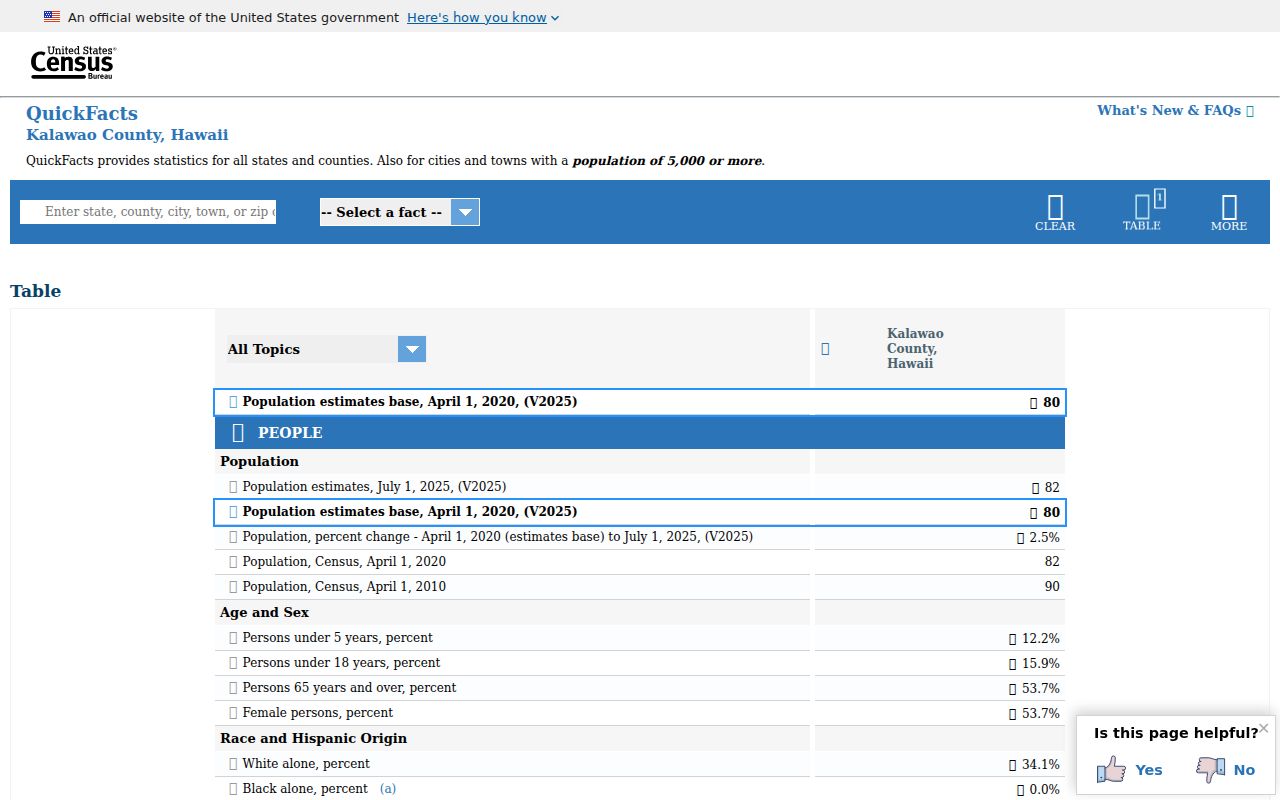
Those small counts also make rates and percentages unstable, so raw totals should be read cautiously and never treated as a city ranking.
History and Architecture Shape Record Access
Kalaupapa's history as an isolation settlement and its continuing resident protections make it unlike a normal county seat. General access has been restricted, services are limited, and photography of patient-residents or their property requires express written consent. A records search should not be planned as an informal visit to the peninsula.
The National Park Service documents Kalawao and Kalaupapa architecture and the settlement landscape.
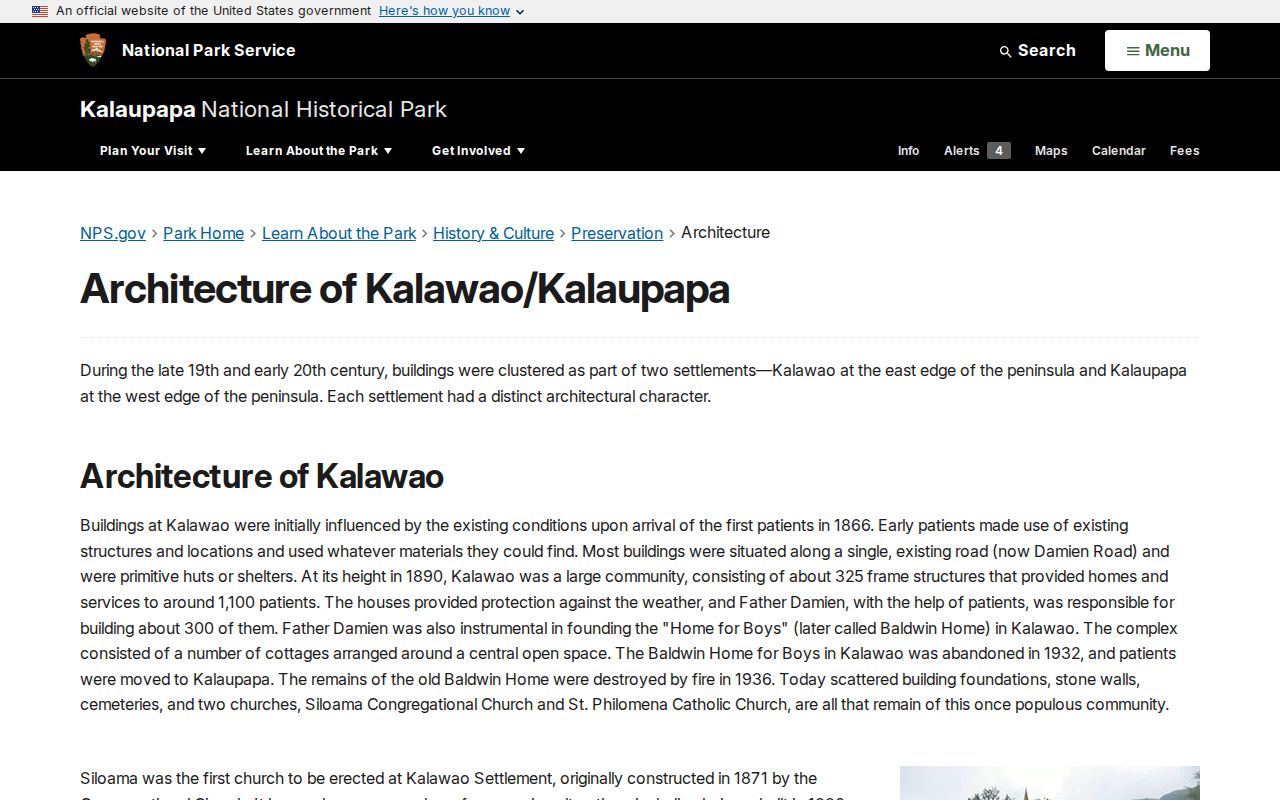
That setting is valuable historical context, but official records still come from the responsible state, federal, or mutual-aid agency.
Probation, Parole, and Correctional Status
Probation is administered by Hawaii Judiciary Adult Client Services rather than a Kalawao county probation department. Parole decisions and supervision belong to the Hawaii Paroling Authority within DCR. Public case events and SAVIN may reveal limited status, but neither system publishes a complete supervision file or local roster.
The Hawaii Paroling Authority page provides its official rules, contacts, and forms.
A parole entry should be checked against the court disposition and current DCR status because supervision and the underlying conviction are separate facts.
Crime Statistics Without a Kalawao Police Series
Hawaii's official Uniform Crime Reporting hub does not show a separate conventional Kalawao police series. The absence follows the county's agency structure and should not be interpreted as zero crime. An NPS matter, deputized sheriff action, or MPD mutual-aid response may be recorded under the acting agency rather than a nonexistent county police department.
The Attorney General's Crime in Hawaii data hub is the official starting point for state statistics.
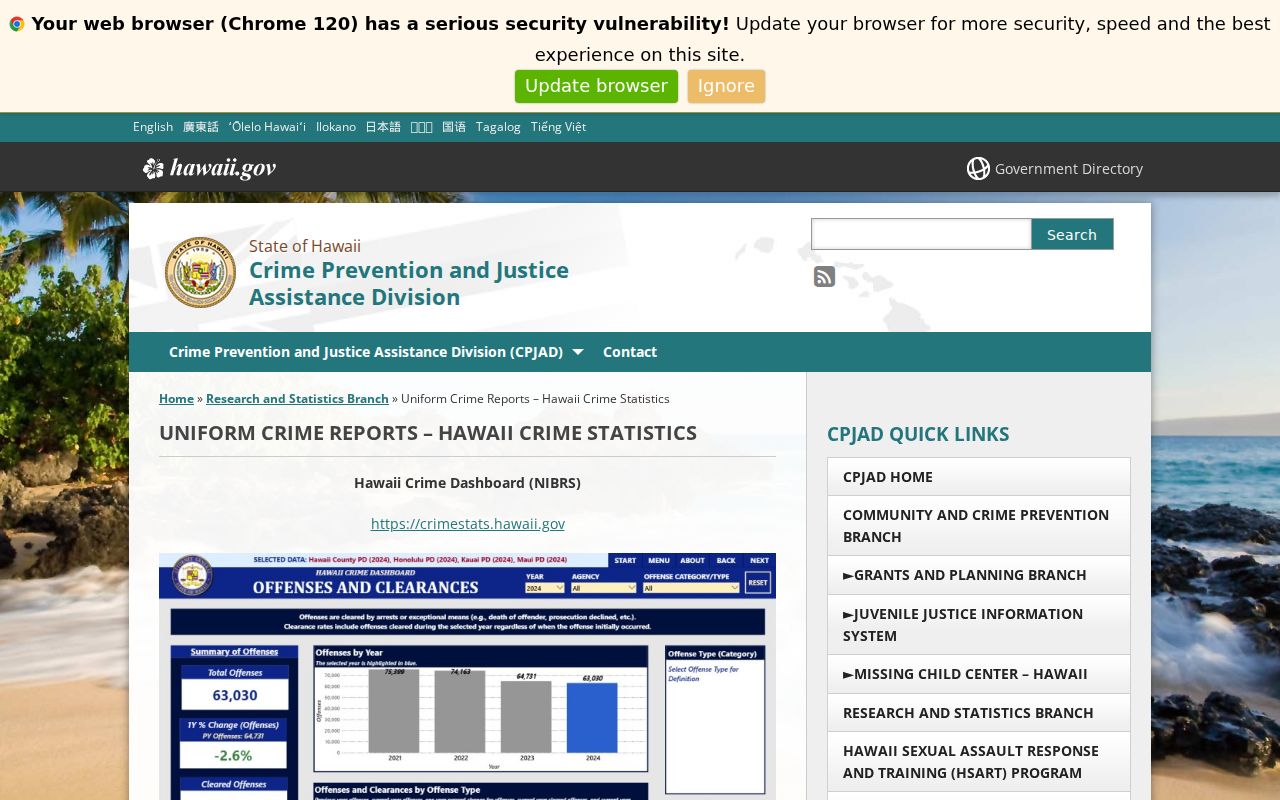
For an individual event, the incident report and court case are more informative than a small-area rate built from a population near 80.
Changing Visitor Access Does Not Create a Clerk
The National Park Service announced a limited public-tour initiative in 2026, but visitor access and government-record access remain different subjects. A tour does not convert park headquarters into a court, police-records, or repository counter, and protected resident rules still matter.
The dated NPS tour announcement describes the access initiative.
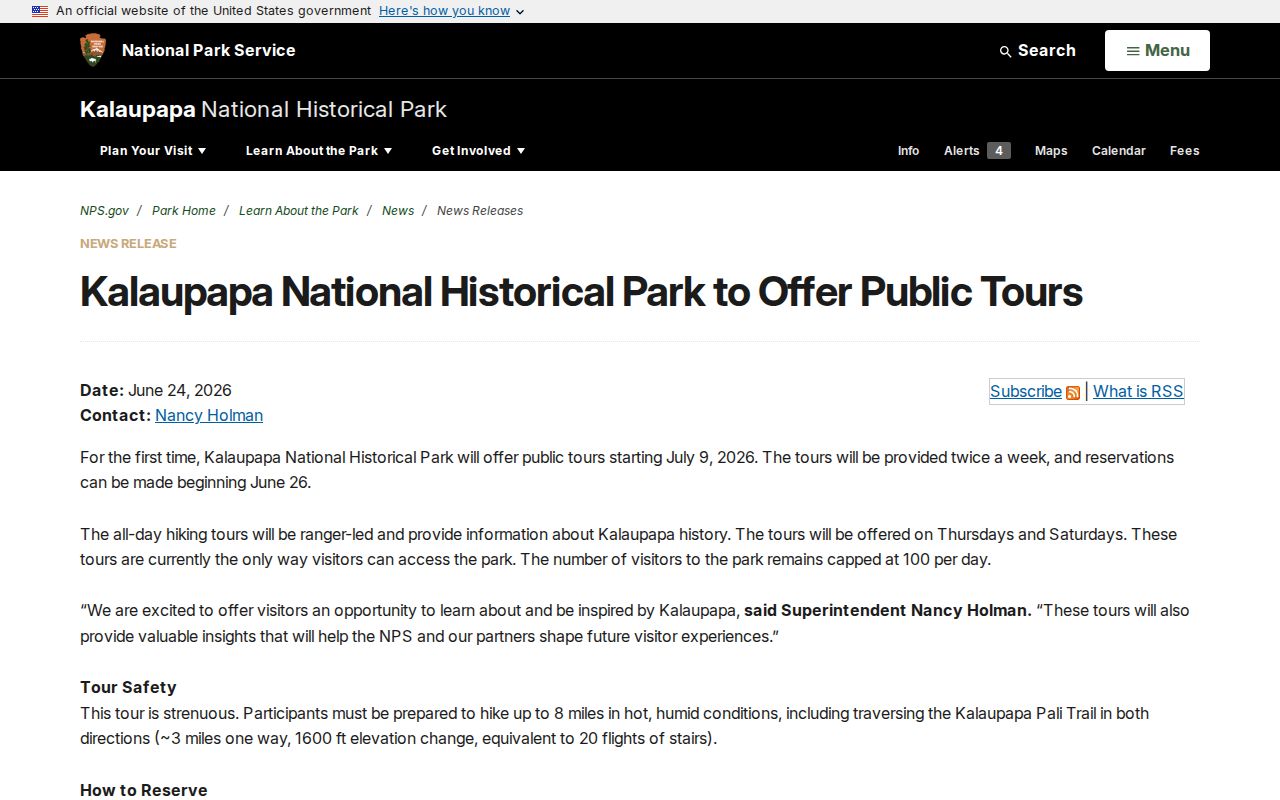
Use remote portals, telephone contacts, and written requests for records rather than assuming that physical entry improves access to official files.